

THINGS TO KNOW
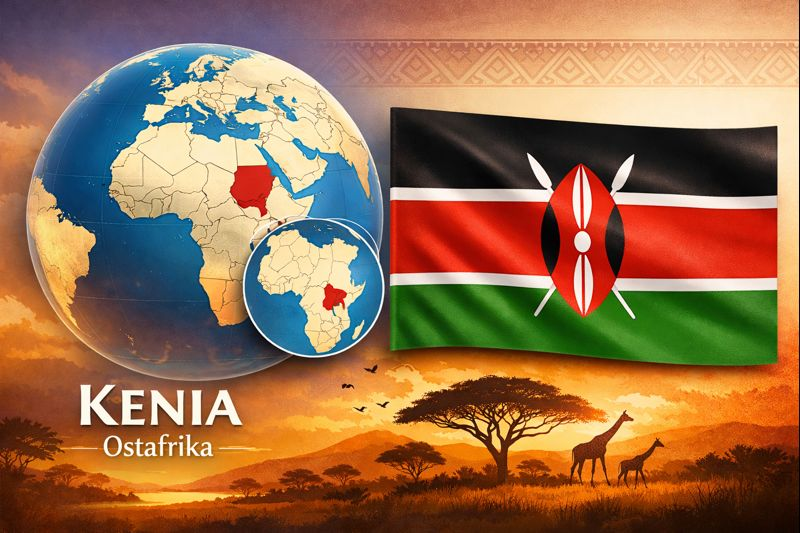
(Quelle: ChatGPT)
Political system
Presidential Republic
Area
580,367 km2
Division of the country
Counties (47)
Capital city
Nairobi
population
57.724.830
population density
101 /km2
megacities
Nairobi, Mombasa
Languages)
Swahili, English
Average age
18.8 years
Number of doctors per 1000 inhabitants
0,20
GDP per capita (nominal)
2.275 USD
BIP Total (nom.)
119 MRD USD
poverty line
25-30 EUR / month
Highest poverty rate
Turkana County (82,7%)
Lowest poverty rate
Nairobi (16.5%)
National poverty rate (Poverty Index 2025)
49%
(Source:Kenya – Wikipedia)
EXCLUSIVE
The Feast of the Epiphany (Manifestation of the Lord),
Sermon by Rev. Basols, Kenya:
“We have come to pay homage to him”
Today we celebrate the Feast of the Epiphany.
The word "Epiphany" means revelation, becoming visible. Christmas tells us that God became man; Epiphany tells us for whom he came – for all people, for the whole world.
The Gospel presents us with a beautiful image: the Wise Men from the East—strangers, outsiders, seekers—who travel a great distance because they saw a star. They do not possess the Holy Scriptures like the people of Israel. They do not belong to the chosen people. And yet, they are the ones who recognize the sign and set out on their journey in faith.
This already tells us something very important about God:
God always transcends boundaries. Boundaries of origin, nation, background, or social status. The light of Christ is not meant to remain hidden—it is meant to be seen.
The wise are people who seek. They study the stars, they ask questions, they are willing to leave behind the familiar. Their path is neither easy nor straightforward. They even take a wrong turn and end up in Herod's palace – a place of fear, power, and manipulation instead of truth.
This contrast is striking.
Herod has all the information, but no willingness to change. The wise have limited knowledge, but open hearts. And that makes all the difference.
When the wise men finally arrive and see the child with Mary, his mother, the Gospel says: “They were filled with great joy.” They fall down and worship him. Not a king on a throne. Not a powerful ruler. But a defenseless child.
This is the great surprise of the epiphany:
God reveals his glory through humility. His power through love. His kingship through devotion.
Then the wise men present their gifts: gold, frankincense, and myrrh.
Gold for the king. Frankincense for God. Myrrh as a symbol of suffering and death.
Even here, the whole life of Jesus is foreshadowed – from his reign to his sacrifice.
But perhaps the most important sentence of the Gospel is at the very end:
"They returned to their country by a different route."
After encountering Christ, they cannot return the way they came.
This is the question that Epiphany poses to us:
Have we truly encountered Christ – and if so, are we ready to be transformed?
Epiphany reminds us that faith is not just about knowing where Jesus is. Herod knew. The scribes knew. Faith means going to him, kneeling before him, and offering him what we have.
And Epiphany also reminds us that we ourselves are now part of this revelation.
Christ is the light of the world – but he wants to shine through us.
In our words. In our decisions. In the way we treat those who feel like outsiders. In standing up for truth instead of fear, for generosity instead of complacency.
At the beginning of this new year, Epiphany invites us to ask:
– Which star does God use to draw me closer to Him? – What gift should I offer Him? – And what “other path” might God be calling me to take?
May we, like the wise, be people who sincerely seek, humbly worship, and walk away transformed – so that through our lives Christ may be revealed to the world.
Amen.
24.12.2025:
Christmas Eve - Sermon by Pastor Basols:
Christmas Vigil Mass – Year A, centered on the Gospel of Matthew 1:1–25.
“God Comes Through Ordinary People”
Tonight, before the lights of Christmas morning and the familiar carols we love, the Church asks us to pause and listen to something that feels… honestly, a little strange.
A genealogy.
“Abraham was the father of Isaac…”
Names, generations, stories layered on stories.
At first glance, it doesn’t feel very Christmassy. Where are the angels? The shepherds? The star?
But Matthew knows exactly what he’s doing.
Because before God comes as a baby in Bethlehem, Matthew wants us to know who God comes through.
And the answer is: real people. Complicated people. Broken people. Faithful people. Sinners and saints all tangled together.
This is not a perfect family tree.
It includes kings who failed, outsiders who didn’t “belong,” people with messy pasts and questionable decisions. And yet—this is the family God chooses.
That alone is good news.
It tells us that God does not wait for perfection before entering the world. God works through history as it actually is, not as we wish it had been.
Then Matthew zooms in on one man: Joseph.
Joseph isn’t the loudest character in the Christmas story. He doesn’t say a single word in the Gospel. But what he does speak loudly is obedience.
Joseph discovers that Mary is pregnant. His whole life plan collapses in an instant. The future he imagined no longer makes sense.
And Matthew tells us something beautiful:
Joseph is righteous. Not because he follows the rules perfectly, but because he chooses mercy.
He plans to quietly step aside—to protect Mary from shame, even at his own cost.
Then God speaks to him in a dream:
“Do not be afraid.”
Those words come up again and again in Scripture. And they always show up right before God does something new.
Joseph doesn’t get all the answers. He doesn’t get proof or guarantees. He gets a promise—and a choice.
And Joseph chooses trust.
That brings us to the heart of Christmas.
The angel says, “They shall name him Emmanuel,” which means God is with us.
Not God above us.
Not God disappointed in us.
Not God waiting until we get it right.
God with us.
With us in confusion.
With us in fear.
With us in family drama, unanswered prayers, and uncertain futures.
God enters the world quietly—through a family, through faith, through a yes that no one else sees.
Tonight, as we begin Christmas, the message is simple and powerful:
God is still choosing to enter the world the same way.
Through ordinary people.
Through imperfect families.
Through hearts willing to trust, even when they don’t fully understand.
You don’t have to have everything figured out to welcome Christ.
You just have to make room.
November 2025
The Kawalase River near Lodwar is notorious for frequent, devastating, and life-threatening floods, which bring many dangers: wild and poisonous animals, disease, and the erosion of roads and houses. The sandy soil cannot absorb the large volume of water and provides no stability for the houses.
Exclusively for us in the following video:
Unity with strong goals:
Immerse yourself in the construction phases of the multi-purpose building in Lodwar.
Note the circumstances and the shortage of building supply stores, building materials, and construction equipment.
Admire the power of a united community that achieves the impossible.